 how-to
Sedona to Grand Canyon: Driving Distance & Route Guide
Table of Contents
- Driving Distance Sedona to Grand Canyon: What to Expect
- Step-by-Step Directions: Sedona to Grand Canyon South Rim
- Best Stops Between Sedona and Grand Canyon
- Private Tours from Sedona to Grand Canyon: What to Know
- Parking, Entrance Fees, and National Park Pass Options
- Electric Vehicle Charging, Winter Driving, and Shuttle Alternatives
- Weather, Elevation, and the Best Time to Visit
- Frequently Asked Questions
Last Updated: September 16, 2026
Driving Distance Sedona to Grand Canyon: What to Expect
The driving distance from Sedona to the Grand Canyon South Rim is roughly 110 to 120 miles, depending on the route, and typically takes about two to two and a half hours of wheel time. This guide from Grand Canyon Journeys covers the routes, the stops worth making, and the logistics that catch first-time visitors off guard. The trip looks short on a map.
Mileage and Drive Time by Route
Two main routes connect Sedona and the South Rim, and they suit different priorities.
| Route | Approx. Distance | Approx. Drive Time | Best For |
|---|---|---|---|
| I-17 and I-40 via Flagstaff and Williams | 110-115 miles | 2 to 2.5 hours | Fastest, most predictable |
| Highway 89A via Oak Creek and Prescott | 150+ miles | 3.5+ hours | Scenic detours, extra time |
Step-by-Step Directions: Sedona to Grand Canyon South Rim
Getting from Sedona to the South Rim follows a simple sequence, but the details decide whether the drive feels routine or rushed. Below are the two practical ways to make the drive, with the highways, junctions, and elevation changes that apply to each.
Route Option 1: I-17 and I-40 Through Flagstaff and Williams
- Leave Sedona via Highway 179 south to the Village of Oak Creek, or via Highway 89A west through West Sedona, both connect to I-17.
- Merge onto I-17 north toward Flagstaff. This is the climb out of red rock country into cooler pine forest, and it is the steepest sustained grade of the trip. Expect the temperature to drop noticeably as you gain elevation.
- In Flagstaff, follow the signs to I-40 west. Flagstaff sits at roughly 7,000 feet, so this is where the air gets thin and the weather can turn.
- Continue west on I-40 to Williams, then take Exit 165 for Highway 64 north.
- Follow Highway 64 north through Valle to the South Rim entrance station at Tusayan.
This is the route most visitors use, and it is the one to plan around if timing is tight. Flagstaff and Williams both sit directly on the way, which makes them natural stops for fuel, food, or a stretch. The I-40 stretch between Flagstaff and Williams is fast and predictable; the Highway 64 run north from Williams is a two-lane road with passing lanes and long sightlines, and it is where a slow vehicle or a wildlife sighting can add unexpected minutes.
Route Option 2: Highway 89A Through Oak Creek and Prescott
The 89A route swings through Oak Creek Canyon and on toward Prescott before turning north, adding significant mileage and time. It rewards travelers who want a scenic drive rather than a direct one. The Oak Creek Canyon switchbacks north of Sedona are tight and slow, and the Prescott-to-I-40 leg involves more two-lane highway than the interstate route. Treat it as a full-day commitment, not a shortcut.
What Changes the Drive Time
- Weekend and holiday traffic on I-17 north of Phoenix can back up well before Flagstaff, especially on Friday afternoons and Sunday returns.
- Winter weather on I-40 and Highway 64 can slow or close sections with little notice. Snow and ice are real concerns at these elevations from roughly November through March.
- The park gate itself can queue during peak arrival windows, particularly mid-morning in summer.
- Wildlife and slow vehicles on Highway 64 north of Williams are a common cause of short delays.
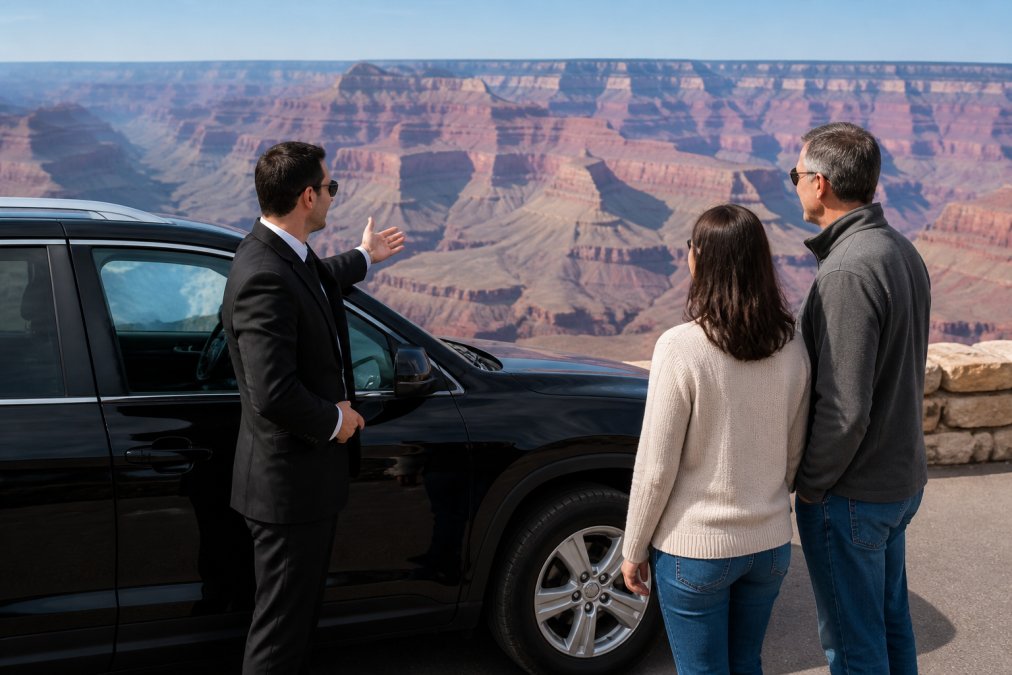
If the day is meant to be about the canyon rather than the drive, a private tour shifts the entire experience. Grand Canyon Journeys runs 100% private tours with pickup in Sedona, Flagstaff, Williams, and Tusayan, so the routing, timing, and parking are handled for you. See the Sedona to Grand Canyon private tour | grandcanyonjourneys.com page for details.
Best Stops Between Sedona and Grand Canyon
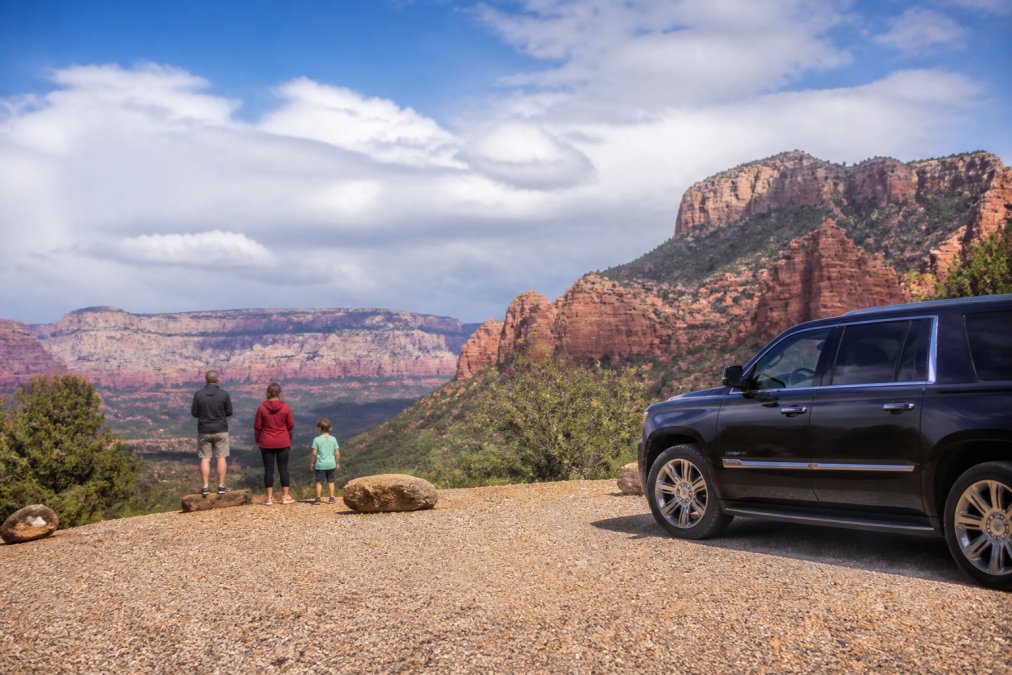
The best stops between Sedona and Grand Canyon depend on the route, but a few stand out. Oak Creek Canyon sits just north of Sedona and offers pullouts along the switchbacks. Flagstaff provides a full range of services and a historic downtown. Williams, a Route 66 town, is the last sizable stop before the park. On Highway 64, the Valle area marks the final stretch to the gate.
Private Tours from Sedona to Grand Canyon: What to Know
Private tours from Sedona to Grand Canyon remove the logistics entirely. Instead of navigating unfamiliar highways and hunting for parking, guests ride door to door and let a guide handle the routing and timing. Grand Canyon Journeys runs 100% private tours with pickup in Sedona, Flagstaff, Williams, and Tusayan, using custom Ford Transit vehicles with flexible seating and legroom. Full-day journeys include dining at the historic El Tovar and park fees, and guides speak both English and German.
Parking, Entrance Fees, and National Park Pass Options
Parking at the South Rim is the single most common source of friction on a Sedona day trip, and it is worth understanding before you go.
Where Parking Fills First
The lots closest to the main visitor center and the most-visited overlooks fill earliest, often by mid-morning in peak season. The pattern most travelers notice is that the outer lots and the lots near the shuttle stops hold space longer, because they require a short walk or a shuttle ride to reach the rim. If you arrive after the prime window, heading straight for a shuttle-served lot is usually faster than circling the closest ones.
How the Shuttle Changes the Parking Math
Inside the park, a shuttle service moves visitors between key points along the rim. That matters for parking because you do not need to reposition your car between overlooks, you can park once and ride. During shuttle operating hours, some sections of the rim drive are closed to private vehicles, which concentrates cars in fewer lots. Outside shuttle hours, you can drive between overlooks yourself, but you give up the flexibility of hopping on and off.
Entrance Fees and Passes
Entrance to Grand Canyon National Park requires a fee, and the National Park Service entrance fee page lists current amounts by vehicle and by person. The fee structure is per-vehicle for most passenger cars, with a separate per-person rate for those arriving on foot, bicycle, or shuttle. An annual America the Beautiful pass covers entrance to federal recreation sites for a year, which can make sense for travelers visiting several parks on one trip.
Timing the Gate and the Crowds
A few habits reliably reduce time lost to lines and lot hunting:
- Arrive early. The first hour or two after the gate opens is the quietest window at the rim.
- Enter mid-afternoon if you are staying overnight. Day-trippers tend to leave in the late afternoon, which opens up parking and overlook space.
- Check the park's shuttle schedule before you go, since operating hours shift by season.
- Have your pass or payment ready at the gate to keep the line moving.
Electric Vehicle Charging, Winter Driving, and Shuttle Alternatives
EV charging exists in Flagstaff, Williams, and near the park, but coverage thins out on the final approach to the rim, so planning a charge before the last leg is wise. Winter driving brings snow and ice to the higher elevations around Flagstaff and the park, and road conditions can change fast. The South Rim sits at roughly 7,000 feet, so winter weather there is real and not a minor concern.
Weather, Elevation, and the Best Time to Visit
Weather varies sharply with elevation along this drive. Sedona sits lower and warmer, while Flagstaff and the South Rim run cooler, and the South Rim at about 7,000 feet is far cooler than the inner canyon below it. Spring and fall bring mild temperatures and lighter crowds. Summer is warm at the rim and hot below it, with afternoon thunderstorms possible. Winter delivers cold, snow, and quieter overlooks.
Frequently Asked Questions
Is it worth driving from Sedona to the Grand Canyon?
Yes, the drive is worth it for the dramatic change in landscape and the chance to see the South Rim. The trip takes about 2.5 to 3.5 hours each way, depending on your route. You'll pass through Flagstaff and Williams, with options to stop at scenic overlooks. A private tour from Sedona to Grand Canyon can handle the driving so you can enjoy the views.
How long does it take to drive from Sedona to the Grand Canyon?
Most drivers take 2.5 to 3 hours via I-17 and I-40 through Flagstaff and Williams. If you choose the scenic Highway 89A route through Oak Creek and Prescott, allow 3.5 to 4 hours. Traffic in Sedona and peak season can add time. Check road conditions before you leave, especially in winter.
Can I take a day trip from Sedona to the Grand Canyon?
Yes, a day trip is possible. Leave early to maximize your time at the South Rim. The drive is about 2.5 to 3 hours each way, so you'll have several hours to explore overlooks, visitor centers, and walking paths. Private tours from Sedona to Grand Canyon offer door-to-door pickup and a flexible pace, making a day trip comfortable.
What should I pack for a day trip to the South Rim?
Pack layers because the South Rim sits at about 7,000 feet and temperatures can be 20 degrees cooler than Sedona. Bring sunscreen, a hat, sunglasses, and comfortable walking shoes. Carry water and snacks. In winter, pack warm clothing and check for road closures. A camera is essential for the canyon views.