 blog
7 Unique Ways to Experience the Grand Canyon in 2026
Table of Contents
- 1. Guided Day Hikes on the Grand Canyon South Rim
- 2. Private Grand Canyon Tours from Sedona
- 3. Sunrise and Sunset at Panoramic Viewpoints
- 4. Aerial Views by Helicopter Over the Canyon
- 5. Colorado River Rafting and Smooth-Water Excursions
- 6. The Grand Canyon Railway from Williams
- 7. Accessible, Off-Season, and Budget-Friendly Hidden Gems
- Frequently Asked Questions
Last Updated: September 12, 2026
1. Guided Day Hikes on the Grand Canyon South Rim
There are 7 unique ways to experience the Grand Canyon, and the most grounded one starts on foot along the South Rim, roughly 7,000 feet above sea level (nps.gov). A guided day hike is a ranger-led or guide-led walk along maintained rim and inner-canyon trails, returning to the rim the same day.
What a Guided South Rim Day Hike Looks Like
A typical guided South Rim day hike covers a section of the Rim Trail or descends partway into the canyon on the Bright Angel or South Kaibab trail, then climbs back out the same day. Elevation gain on the way out is the part most people underestimate. A common mistake is treating a downhill start as an easy hike; the return leg is where fitness matters most.
- Distance matters less than elevation gain
- Start early to avoid afternoon heat on exposed switchbacks
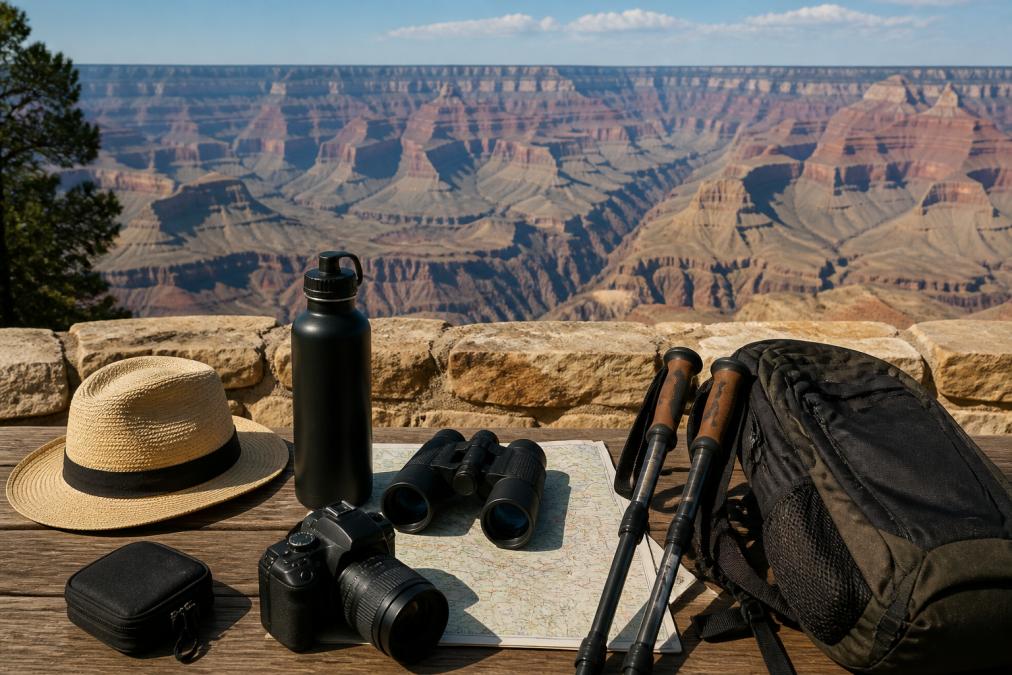
- Carry more water than feels necessary
- Layer clothing for a 20-degree swing between rim and canyon floor
2. Private Grand Canyon Tours from Sedona
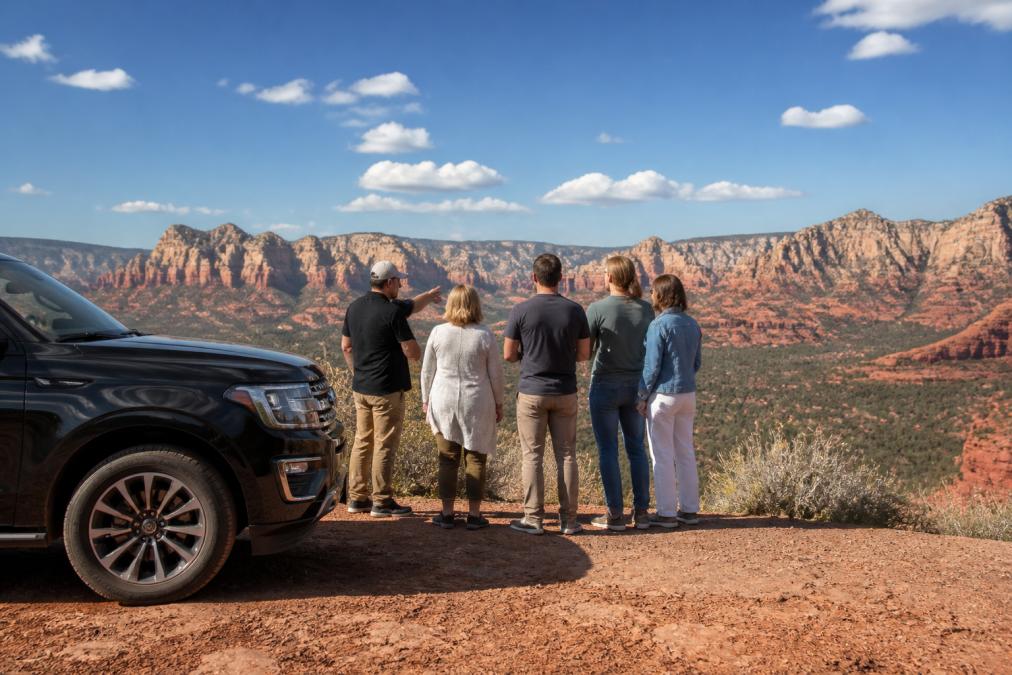
Private Grand Canyon tours from Sedona solve the problem most visitors don't anticipate: the drive itself. Sedona sits roughly two hours from the South Rim, and a private tour turns that transit into part of the experience rather than a chore (azdot.gov). Grand Canyon Journeys runs 100% private tours with door-to-door pickup from Sedona, Flagstaff, Williams, and Tusayan in custom Ford Transit vans, with park fees included.
The difference between this and a standard group tour is control. Groups set the pace, decide how long to linger at each viewpoint, and skip the rigid departure times that define larger operations. For families with young kids or couples marking an anniversary, that flexibility is the whole point.
| Tour Style | Pickup | Pace | Group Size |
|---|---|---|---|
| Private day tour | Door-to-door | Guest-set | Your group only |
| Standard group tour | Fixed meeting point | Fixed schedule | Mixed strangers |
3. Sunrise and Sunset at Panoramic Viewpoints
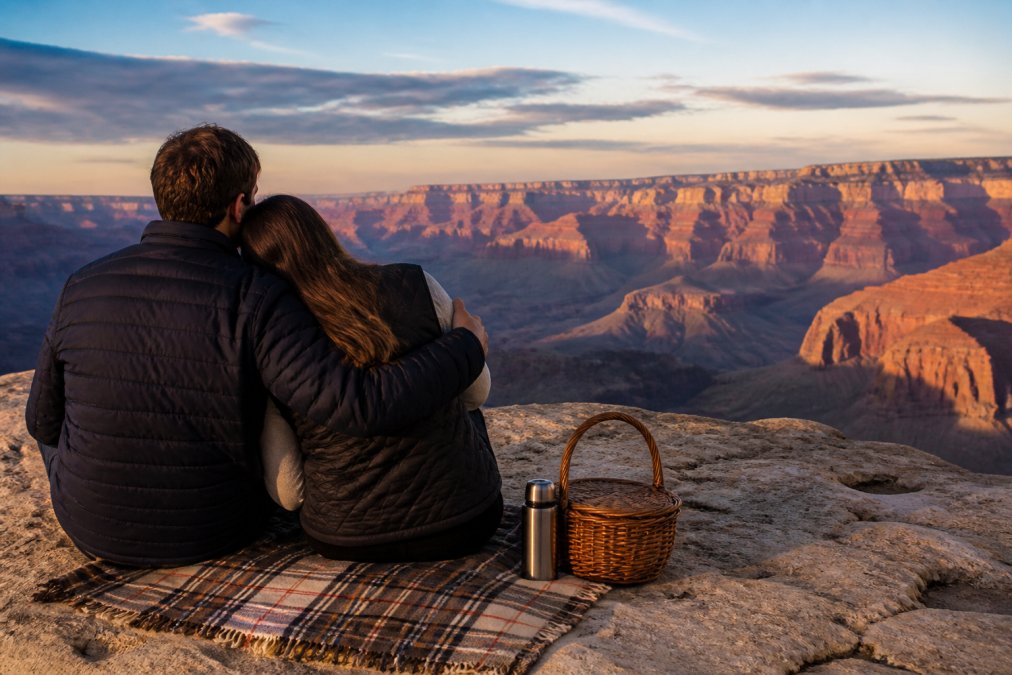
Sunrise and sunset are when the canyon's layered red rock formations glow, and the South Rim's panoramic viewpoints face the right direction to catch both. Mather Point and Yavapai Point are the classic sunrise spots; Hopi Point and Pima Point draw crowds at sunset. Arriving 30 to 45 minutes early is the difference between a clear view and a parking scramble.
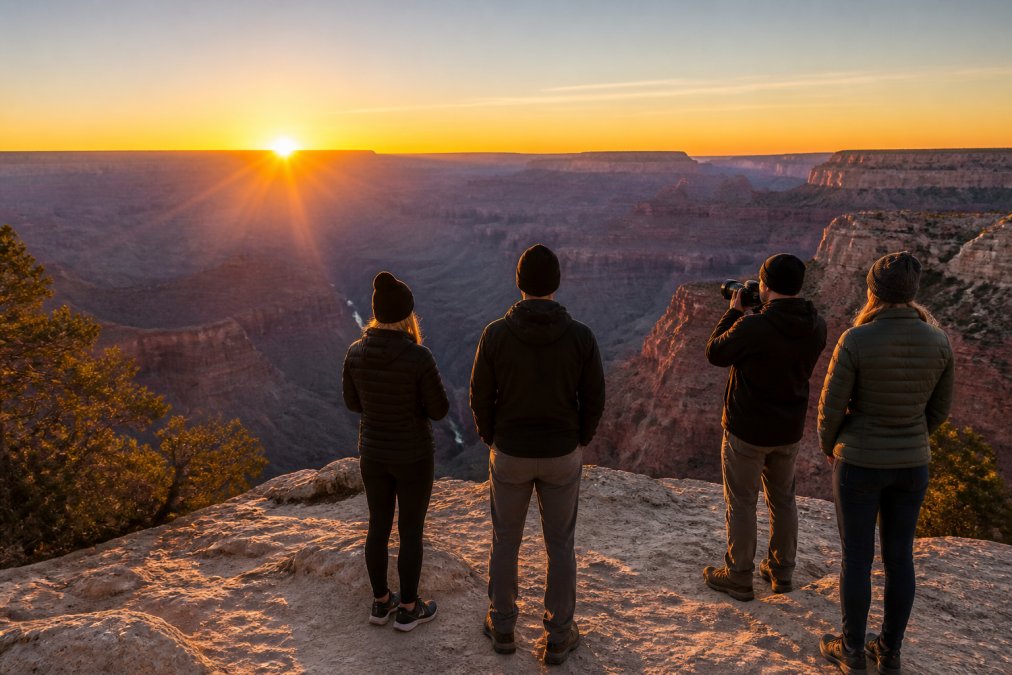
The South Rim sits near 7,000 feet, so mornings are cold even in summer. Bring a jacket. Inner-canyon temperatures run far hotter than the rim, which matters if a hike is part of the plan.
4. Aerial Views by Helicopter Over the Canyon
A helicopter flight is the fastest way to understand the canyon's scale, because the rim viewpoints only ever show you one wall at a time. From the air you see the river, the side canyons, and the full width of the gorge in a single sweep, a perspective no ground tour can replicate.
South Rim vs. West Rim Flights
The two departure areas are not interchangeable, and the difference matters more than most booking pages admit.
- South Rim flights leave from the area around Grand Canyon Village and Tusayan, inside Grand Canyon National Park. Routes typically range from a short canyon-edge loop to longer flights that reach toward the North Rim and the eastern canyon. Because they launch inside the park, you spend more of your air time over the canyon itself.
- West Rim flights operate from the Grand Canyon West area, which sits on Hualapai tribal land well outside the national park and roughly a two-hour drive from the South Rim. West Rim routes often include the Skywalk and the Colorado River corridor near the canyon's western end.
If your trip is built around the South Rim, a South Rim flight keeps your day compact. If you are already heading toward the West Rim, a flight there pairs naturally with the ground attractions on that side.
What Actually Shapes the Experience
- Flight length. Short loops run in the range of 25 to 50 minutes; longer routes that reach the North Rim or the eastern canyon run closer to an hour. Ask what you will actually fly over, not just how long the flight lasts.
- Aircraft type. Some routes use standard helicopters; others use aircraft with larger windows or a different seating layout. Window position affects photography more than most passengers expect.
- Weight and balance rules. Every operator assigns seats partly by passenger weight for safety and balance. If a specific seat matters to you, say so at booking, it cannot be guaranteed, but it can often be requested.
- Time of day. Morning departures usually mean calmer air and softer light; midday flights give the most even illumination of the canyon walls; late-afternoon flights catch the warmest color. Afternoon turbulence is common in summer.
Booking Realities
Helicopter seats sell out well in advance during peak season, and weather can ground flights with little notice. Build a buffer day into your itinerary if the flight is a priority, and confirm the operator's weather-cancellation terms before you pay. If you are staying in Sedona, Flagstaff, Williams, or Tusayan, ask whether your flight includes ground transfer or whether you need to drive yourself to the departure point, the answer varies by operator and route.
A common pattern is to pair a morning helicopter flight with an afternoon ground tour, so you get the wide shot and the close-up on the same day without doubling your driving.
5. Colorado River Rafting and Smooth-Water Excursions
Colorado River rafting splits into two very different experiences: whitewater trips through the canyon's heart and smooth-water floats on calmer stretches near Lees Ferry. Smooth-water excursions suit families and anyone wanting the river without the adrenaline.
The river reveals the canyon from the bottom up, exposing geological history that rim views flatten into a single band of color. Permits and seasonal closures govern access, so booking well ahead is standard.
6. The Grand Canyon Railway from Williams
The Grand Canyon Railway runs from Williams to the South Rim, reviving a historic rail route that predates the highway. The trip takes roughly two hours each way, with restored cars and onboard narration covering the region's history. It's a strong option for travelers staying in Williams who want the journey to count as part of the day.
Pairing the railway with a South Rim walking itinerary works well, since the train arrives at the village, steps from the Rim Trail and the historic district.
7. Accessible, Off-Season, and Budget-Friendly Hidden Gems
Most guides to the 7 unique ways to experience the Grand Canyon assume a fit hiker, a summer visit, and a helicopter budget. This section is for everyone else.
Accessibility-Focused Experiences on the South Rim
The South Rim is one of the more accessible major national park destinations in the country, but the details are what make a low-mobility day work.
- The Rim Trail is paved and largely flat between Grand Canyon Village and Mather Point, making it usable for wheelchairs, strollers, and anyone who wants the views without elevation change. It is the single best accessible viewpoint corridor in the park.
- Yavapai Point and Geology Museum sits right on the Rim Trail with an indoor viewing area and interpretive exhibits, a strong option on a cold or windy day.
- Mather Point is the closest major viewpoint to the Visitor Center and has paved access and nearby accessible parking.
- Shuttle buses on the Village and Kaibab Rim routes are equipped to carry wheelchairs, and using them removes the need to walk long distances between viewpoints. The Hermits Rest Route, which serves many of the western viewpoints, is shuttle-only for most of the year.
- Accessible parking and restrooms are available at the Visitor Center and at several major viewpoints along the rim.
A practical low-mobility day looks like this: park at the Visitor Center, walk or roll the paved stretch to Mather Point, take the shuttle to Yavapai Point, and use the shuttle to reach one or two more viewpoints without committing to a long walk. Plan around the shuttle schedule rather than against it.
Winter and Off-Season Travel
Winter on the South Rim is a genuinely different park. Crowds drop sharply, hotel rates soften, and the canyon walls pick up snow and low-angle light that summer visitors never see. The South Rim sits near 7,000 feet, so winter here means real winter, snow, ice, and cold wind, not a mild desert season.
What changes in winter:
- Roads. The main park road and the road to Hermits Rest can close after storms. Desert View Drive to the east can also close. Check road status the morning of your visit.
- Trails. Rim trails ice over quickly. Traction devices for your shoes turn a slippery walk into a safe one, and they are the single most useful winter item to pack.
- Services. Some lodges, restaurants, and shuttle routes operate on reduced schedules. Confirm what is open before you build a day around it.
- The East Entrance. The highway in from the east stays open more reliably than some inner-park roads, which makes it a useful backup approach.
Winter also delivers the best photography conditions of the year for many visitors: low sun angles, dramatic clouds, and snow-dusted formations against red rock. Sunrise and sunset last longer and the viewpoints are far less crowded.
Budget-Friendly Angles
You do not need a helicopter or a river permit to have a memorable day. The park entrance fee covers access to every rim viewpoint, the Rim Trail, the Visitor Center, and the shuttle system. A day built around the shuttle, the Rim Trail, and a sunrise or sunset viewpoint costs almost nothing beyond entry and food.
Other low-cost angles worth knowing:
- Ranger programs run throughout the year and cover geology, wildlife, history, and night skies. They are free with park entry and are one of the most underused resources at the rim.
- The Visitor Center and park film give context that makes everything you see afterward more legible, especially useful on a first visit or a short one.
- Desert View Watchtower at the East Entrance offers a different architectural and cultural perspective on the canyon, and the drive out there passes several quieter viewpoints.
- Off-season timing is itself a budget strategy: lodging and tour availability both loosen up outside the summer peak.
For seasonal closures, shuttle route details, and current access information, the National Park Service Grand Canyon guidance is the authoritative source to check before any off-season visit.
Frequently Asked Questions
What are some unique ways to explore the Grand Canyon South Rim?
Beyond the standard overlook stops, you can join a guided day hike below the rim, book a private tour that departs from Sedona or Flagstaff, catch sunrise at a quiet viewpoint, take a helicopter flight for an aerial view, or ride the Grand Canyon Railway from Williams. Off-season visits and accessible paved trails at the South Rim also offer quieter, less crowded ways to take in the canyon.
How can I avoid crowds while visiting the Grand Canyon?
Visit during the off-season, arrive at popular viewpoints before sunrise, and walk a short distance along the Rim Trail away from the main shuttle stops. A private tour with a flexible itinerary lets your group move at its own pace and adjust timing around busy periods. Winter visits bring smaller crowds and distinct canyon views, though South Rim trails can be icy and traction devices help.
What is the best way to see the Grand Canyon from Sedona or Flagstaff?
Both Sedona and Flagstaff sit within a comfortable day-trip range of the South Rim, roughly two hours by road. A private Grand Canyon tour from Sedona or Flagstaff includes door-to-door pickup, so you skip parking and shuttle logistics. Full-day options typically include park fees and time at multiple viewpoints, letting you see more of the canyon in a single visit.
Are private tours better for visiting the Grand Canyon?
Private tours suit families, couples, and small groups who want a flexible pace, direct hotel pickup, and a guide focused on their interests. They work especially well for travelers staying in Sedona, Flagstaff, Williams, or Tusayan who prefer not to drive and park at the South Rim. Grand Canyon Journeys offers 100% private tours with English and German-speaking guides and a full refund when canceled at least 24 hours before departure.