 listicle
Exclusive Grand Canyon Sunset Viewing Experiences
Table of Contents
- Why Grand Canyon Sunsets Demand Planning
- Best Sunset Spots on the South Rim
- Private Luxury Grand Canyon Tours for Sunset
- What to Wear for Grand Canyon Sunset Viewing
- Planning a Day Trip from Sedona to Grand Canyon
- Logistics That Make the Difference
- Frequently Asked Questions
Last Updated: September 19, 2026
Why Grand Canyon Sunsets Demand Planning
A Grand Canyon sunset is not something you stumble into. The difference between a memorable experience and a crowded, rushed hour comes down to one thing: preparation. The South Rim sits at approximately 7,000 feet in elevation, which means sunset timing shifts dramatically with the season. Winter sunsets occur around 5 p.m.; summer sunsets stretch past 8 p.m. Without knowing these details in advance, travelers arrive at popular viewpoints to find parking full and viewing spots packed shoulder-to-shoulder.
Planning a grand canyon sunset viewing experience means understanding shuttle schedules, viewpoint accessibility, and crowd patterns before you arrive.
According to National Park Service visitor planning guides, the South Rim receives roughly 4 million visitors annually, with peak season running March through October. This concentration means that casual planning often results in frustration rather than the panoramic vistas and golden hour photography opportunities the canyon offers.
Best Sunset Spots on the South Rim
The South Rim offers distinct viewpoints, each with different characteristics for sunset viewing. The most popular locations fill quickly, but less-known overlooks deliver equally stunning grand canyon sunset viewing with far fewer crowds.
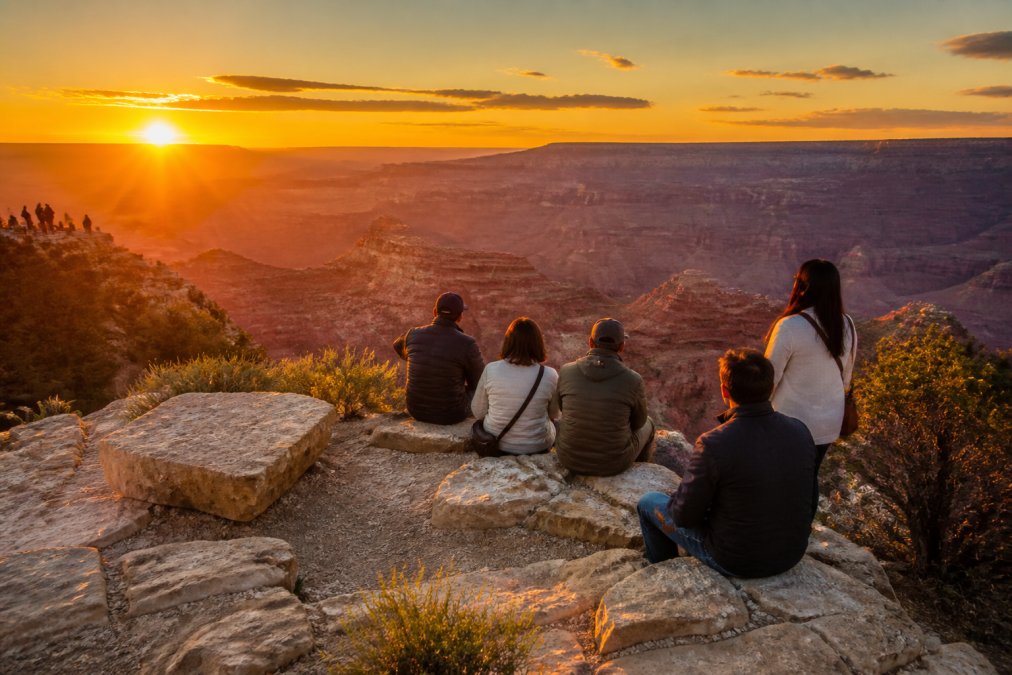
Hopi Point and Panoramic Vistas
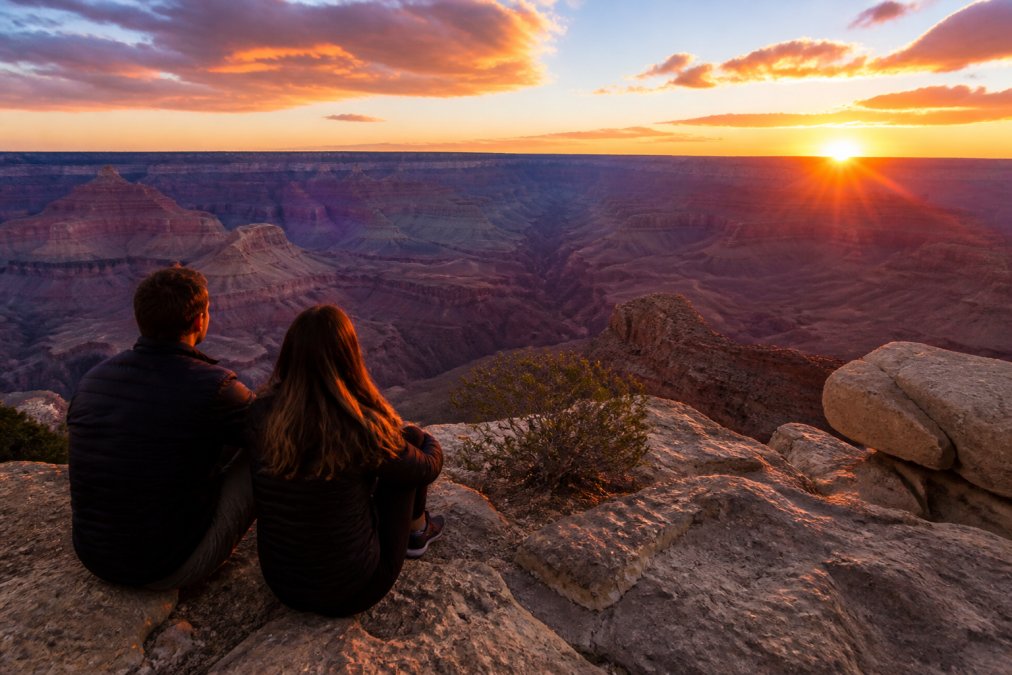
Hopi Point delivers the widest panoramic vistas on the South Rim, capturing the full color progression during golden hour from deep reds and oranges to purple shadows in the canyon depths.
Hopi Point is the most popular sunset spot; parking fills by mid-afternoon during peak season. Arrive two hours before sunset for reasonable parking odds. The viewpoint has paved, wheelchair-accessible paths suitable for families and older visitors.
Pros:
- Widest panoramic views of any South Rim viewpoint
- Paved, wheelchair-accessible paths
- Multiple viewing platforms spread crowds somewhat
Cons:
- Parking fills during peak season
- Most crowded sunset location
- Limited shade or shelter
Mohave Point for Golden Hour Photography
Mohave Point sits slightly west of Hopi Point and offers excellent photographic composition; canyon geometry creates natural framing and the light emphasizes layered rock formations during golden hour.
The smaller viewing area means fewer people blocking sightlines, though parking is equally limited. Arrive before 3 p.m. during peak season for better odds.
Pros:
- Excellent photographic composition opportunities
- Slightly less crowded than Hopi Point
- Golden hour light angles favorably on canyon walls
Cons:
- Limited parking
- Less accessible for mobility-challenged visitors
- Smaller viewing area
Pima Point and Off-Peak Solitude
Pima Point sits at the western end of the scenic drive and receives a fraction of the traffic of Hopi and Mohave Points, offering genuine solitude with exceptional views from a different angle.
Pima Point works best for travelers prioritizing solitude over crowds, though the parking area is smaller and the viewpoint sits farther from visitor facilities.
Pros:
- Significantly fewer crowds
- Genuine solitude possible
- Excellent views with different perspective than eastern points
Cons:
- Farthest from visitor services
- Smaller parking area
- Less developed facilities
Private Luxury Grand Canyon Tours for Sunset
Grand Canyon Journeys offers 100% private sunset tours with door-to-door pickup from Sedona, Flagstaff, Williams, and Tusayan, including park entrance fees, professional guidance, and flexible pacing tailored to your group.
Your guide handles timing, parking, and viewpoint selection based on current conditions, eliminating the scramble for parking and uncertainty about whether your chosen viewpoint will work.
If your group moves slowly or wants extended time at a viewpoint, a private tour accommodates that. If weather or crowds change, your guide can pivot to an alternative viewpoint in real time.
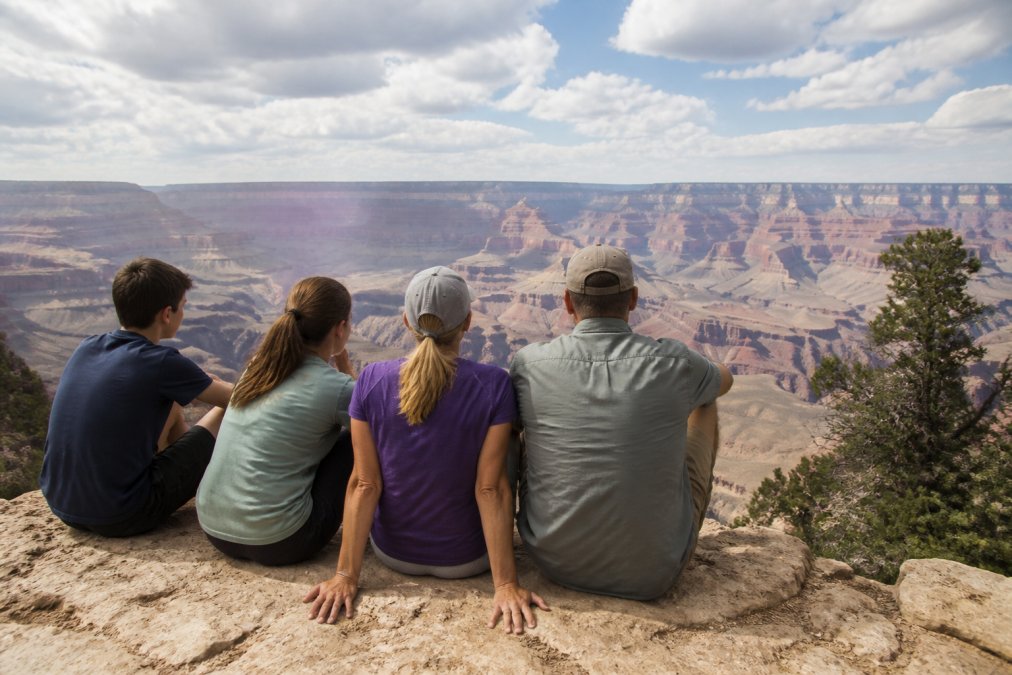
For families with children, this approach reduces stress significantly. Kids don't need to manage long waits or compete for viewing space. The vehicle provides comfort between viewpoints, and the guide can time the experience around your group's energy and attention span.
What to Wear for Grand Canyon Sunset Viewing
The South Rim's elevation of approximately 7,000 feet creates weather conditions that catch many visitors unprepared. Temperature, wind, and UV exposure all behave differently at this altitude than at lower elevations, and sunset timing compounds the challenge, the sun dips below the horizon quickly, and the temperature drop accelerates once it does.
Temperature and Layering Strategy
Expect temperatures to fall 20-30°F between mid-afternoon and dusk, even in summer. Winter temperatures frequently drop below freezing within an hour after sunset. Layer clothing you can adjust as conditions change.
Start with a moisture-wicking base layer (merino wool or synthetic). Add fleece or lightweight down, then a wind-resistant outer shell. The canyon rim creates wind tunnels; wind can make 50°F feel like 35°F.
During summer (June-August), bring layers in a daypack even if you don't wear them until sunset approaches; afternoon heat doesn't persist after dark.
During winter (December-February), the South Rim can be snow-covered or icy. Plan for temperatures in the 20s-30s°F by dusk; bring insulated jackets, thermal leggings, and waterproof outer layers.
Footwear and Stability
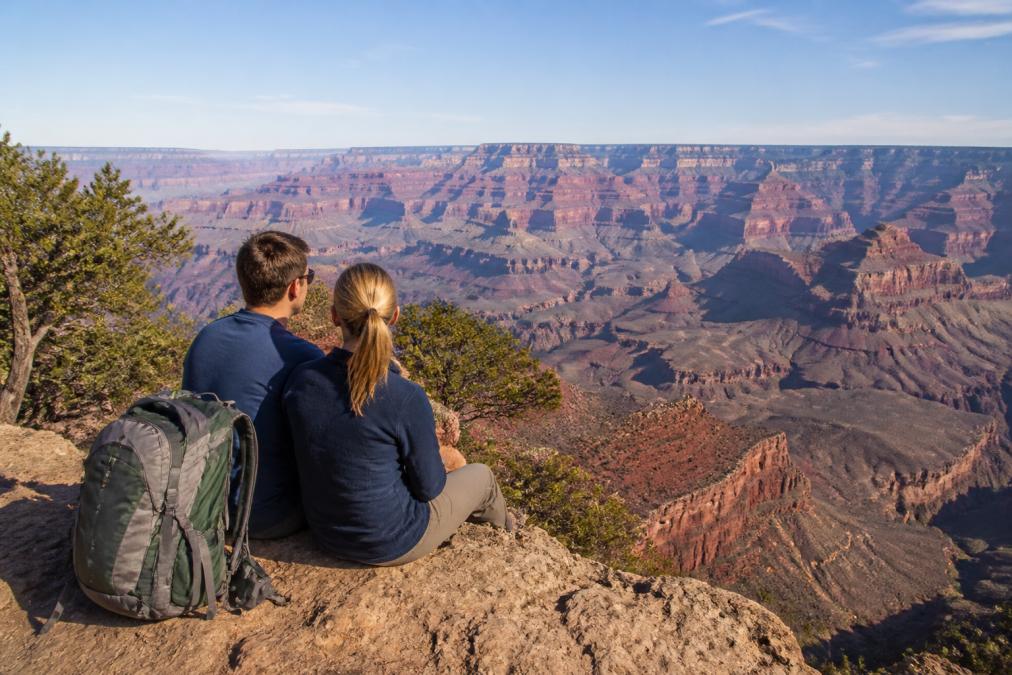
Viewpoints require standing for extended periods. Wear closed-toe hiking boots or sturdy walking shoes with good arch support; avoid flip-flops and sandals. Uneven terrain with loose gravel increases slip risk, especially after dark.
If you have mobility concerns, bring a lightweight walking stick or trekking pole for additional stability on uneven ground.
Sun and Wind Protection
At 7,000 feet, UV radiation is stronger and sunburn happens faster. Bring SPF 30+ sunscreen and reapply every two hours. Include SPF lip balm.
Wear a wide-brimmed hat during bright afternoon hours. Keep it accessible for warmth after sunset; canyon winds can be strong.
Bring sunglasses for bright afternoon hours and the drive home if leaving after dark.
Hydration at Elevation
At 7,000 feet, dehydration causes headaches, fatigue, and dizziness. Bring at least two liters of water per person for a 4-5 hour visit. Consistent hydration prevents afternoon fatigue.
Seasonal Specifics
Spring/Fall (March-May, September-November): 50s-60s°F afternoon, 40s by dusk. Bring lightweight jacket and wind layer.
Summer (June-August): 70s-80s°F afternoon, 50s-60s by dusk. Pack fleece in daypack.
Winter (December-February): 40s-50s°F afternoon, 20s-30s by dusk. Bring insulated jacket, thermal layers, and waterproof shell.
Planning a Day Trip from Sedona to Grand Canyon
Sedona sits roughly 30 miles south of the South Rim, approximately 90 minutes away by car.
Depart Sedona by mid-morning to arrive at your viewpoint with adequate time before sunset.
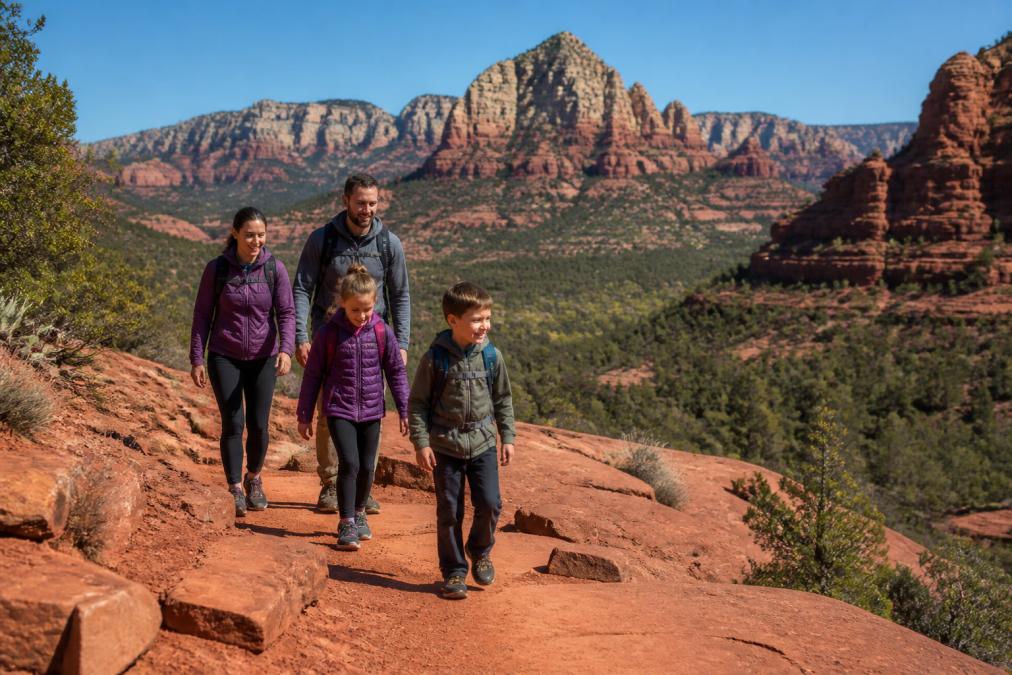
The drive climbs from Sedona's red-rock landscape into ponderosa pine forests, illustrating the elevation change that affects sunset timing and temperatures.
For a full-day experience, depart Sedona by 10 a.m. and plan to return by 9 p.m., allowing 4-5 hours at the canyon.
Grand Canyon Journeys offers private day trips from Sedona with hotel pickup, park entrance fees, and professional guidance, eliminating navigation uncertainty.
Logistics That Make the Difference
Understanding how the park operates on your visit day separates a smooth experience from a frustrating one.
Parking Strategy and Timing
Main parking areas fill during peak season (March-October), often by 2-3 p.m. on summer weekends.
Once a lot is full, the NPS closes its entrance until spaces open (typically 8-9 p.m. as visitors leave).
Shuttle Bus Operations and Last-Bus Timing
Crowd Density Patterns and Viewpoint Selection
Weather, Visibility, and Atmospheric Conditions
Accessibility for Elderly and Mobility-Limited Visitors
Wheelchair accessibility: Hopi Point, Mohave Point, and Yavapai Geology Museum have paved, wheelchair-accessible paths and viewing areas. These viewpoints have accessible parking, accessible restrooms, and level or gently sloping terrain. Pima Point and Lipan Point have accessible parking but less developed paved paths; the terrain is uneven.
Real-Time Decision Making
Frequently Asked Questions
What are the best vantage points for sunset at the South Rim?
Hopi Point, Mohave Point, and Pima Point offer the most dramatic panoramic vistas during golden hour. Hopi Point provides the widest canyon views and accommodates larger crowds. Mohave Point is ideal for photography with its elevated rim-to-rim perspective. Pima Point attracts fewer visitors, making it perfect for those seeking solitude. Each viewpoint sits at approximately 7,000 feet elevation, where temperature drops significantly after sunset, so plan accordingly.
How should I prepare for a day trip from Sedona to Grand Canyon for sunset viewing?
Depart early to secure parking and avoid peak-season crowd density at scenic overlooks. Allow 2-3 hours of drive time from Sedona. Bring water, snacks, and layers, the South Rim temperature drops 25-30 degrees after dark. Wear comfortable walking shoes for accessing viewpoints and trailheads. Check shuttle bus schedules if using park transportation. Arrive at your chosen viewpoint at least 90 minutes before sunset to claim a good spot and acclimate to the elevation. Private tours eliminate parking stress and provide door-to-door convenience.
What makes private luxury tours different for sunset viewing experiences?
Private tours offer flexible timing, allowing you to visit multiple scenic overlooks without adhering to shuttle bus service schedules. You avoid crowd management issues at popular viewpoints and can linger as long as you wish. Professional guides provide geological and cultural context that deepens your appreciation of the canyon's formations. Door-to-door pickup from Sedona, Flagstaff, Williams, or Tusayan eliminates parking logistics entirely. Custom itineraries let you prioritize photography, solitude, or family-friendly pacing based on your group's preferences.
What should I pack for a sunset viewing experience at the South Rim?
Bring multiple layers: the South Rim sits at 7,000 feet with significant temperature drops after dark. Pack a warm jacket, long pants, and closed-toe hiking boots. Bring sunscreen, a wide-brimmed hat, and sunglasses for daytime viewing. Carry plenty of water and light snacks. If photographing sunset, bring a tripod for stability during low-light conditions and a camera with manual shutter speed control for golden hour and silhouette photography. A flashlight or headlamp helps navigate back to parking after darkness falls.