 listicle
Flagstaff Sightseeing Tours: Your Guide to Private Adventures
Table of Contents
- What Makes Flagstaff Sightseeing Tours Different
- Private Grand Canyon Tours Departing from Flagstaff
- Full-Day Sightseeing Itineraries and What to Expect
- Guided Canyon Hikes and Adventure Options
- Seasonal Availability and Best Times to Visit
- Transportation, Logistics, and Accessibility Considerations
- Planning Your Flagstaff Tour: Booking and Cancellation
- Frequently Asked Questions
Last Updated: August 31, 2026
What Makes Flagstaff Sightseeing Tours Different
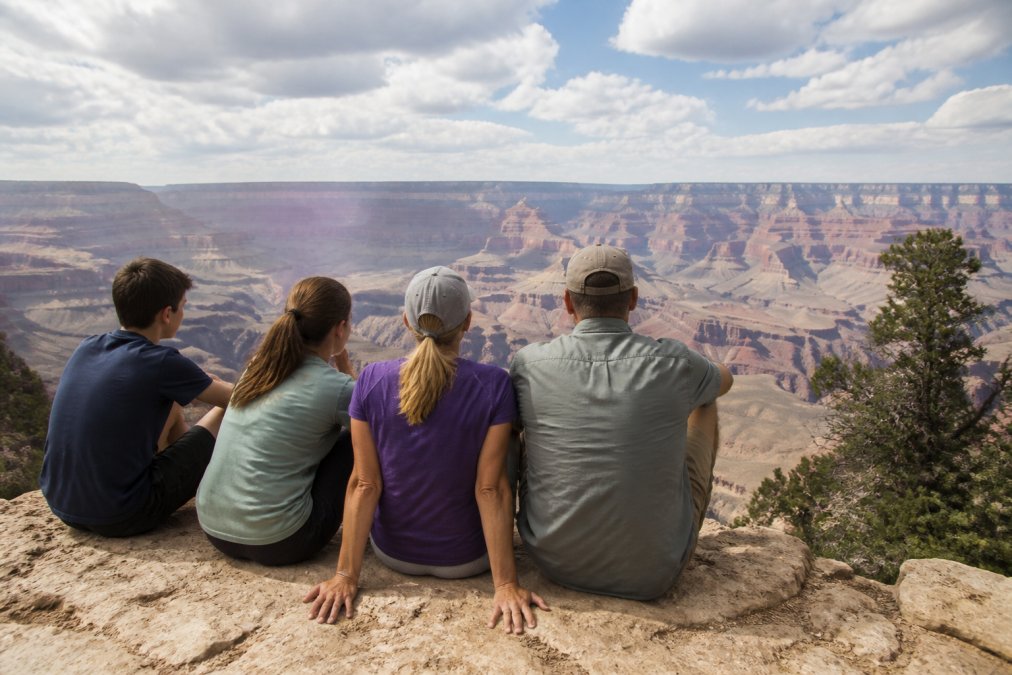
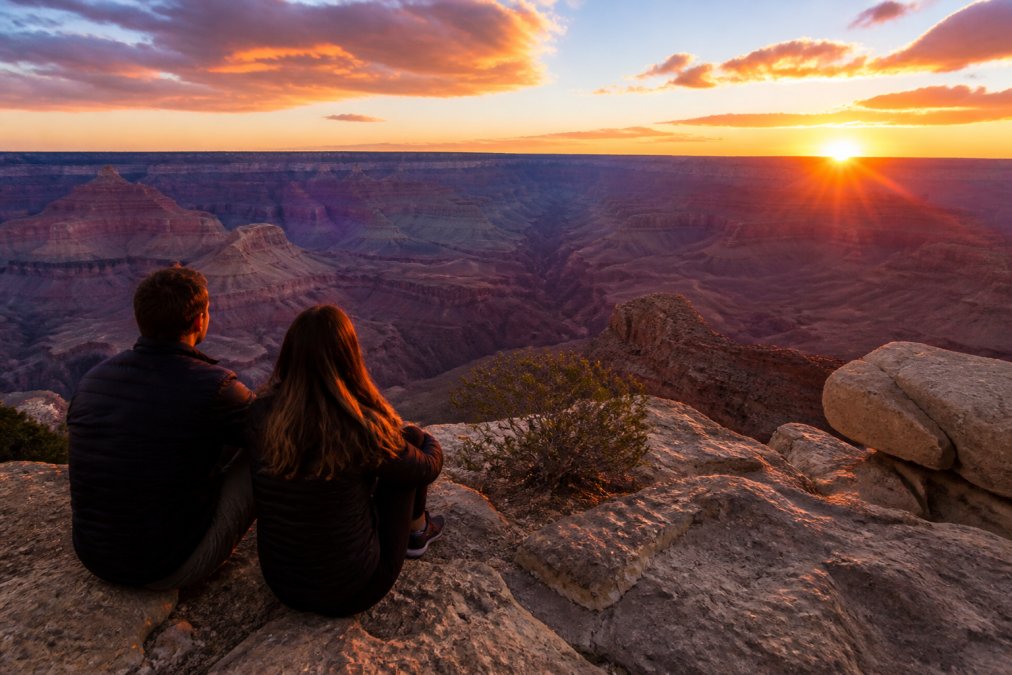
Private sightseeing tours departing from Flagstaff offer a fundamentally different experience from crowded motorcoach operations. Rather than joining 40 strangers on a fixed schedule, travelers explore at their own pace in small groups with custom vehicles designed for comfort and flexibility. Families can pause longer at viewpoints where children engage with the landscape; couples can arrange sunset viewing without adhering to predetermined itineraries; multi-generational groups can accommodate different mobility levels without holding up a full bus.
Grand Canyon Journeys operates 100% private tours from Flagstaff, serving pickup locations across Northern Arizona including Sedona, Williams, and Tusayan. The company uses upgraded Ford Transit vans that prioritize passenger comfort and sightseeing visibility, with flexible seating arrangements that adapt to group composition. This model, private vehicles, door-to-door pickup, and included park fees on full-day itineraries, directly addresses the logistical friction that makes standard bus tours inconvenient for travelers seeking personalized service.
A guided excursion becomes interpretive rather than transactional. Professional guides with deep knowledge of geology, ecology, and regional history transform scenic views into educational experiences. When a geologist explains the 1.8-billion-year timeline compressed into canyon walls, the landscape shifts from beautiful backdrop to scientifically legible narrative.
Flagstaff's elevation of approximately 7,000 feet creates distinct advantages as a departure point (usgs.gov). The cooler alpine climate makes full-day sightseeing more comfortable than starting from lower elevations. Flagstaff sits roughly 80 miles south of the South Rim, positioning it as a logical hub for visitors exploring Northern Arizona's cluster of attractions: Sedona's red rocks, Walnut Canyon's cliff dwellings, and the San Francisco Peaks.
Private Grand Canyon Tours Departing from Flagstaff
Grand Canyon Journeys operates private sightseeing tours from Flagstaff that bundle transportation, interpretation, and park access into a single experience. The core offering is a full-day guided excursion that departs from hotel or lodging pickup in the Flagstaff area, travels to the South Rim, and returns by evening. This structure eliminates the logistical burden of self-driving, navigating unfamiliar roads, and managing parking.
Full-day sightseeing itineraries typically include multiple South Rim viewpoints selected for geological significance and scenic impact. The itinerary often incorporates Mather Point, Yavapai Geology Museum, and named overlooks that illustrate the canyon's formation and rock layers. Professional guides contextualize the landscape: explaining why certain viewpoints reveal specific geological features, discussing ancestral Puebloan and Native American heritage, and identifying wildlife and vegetation adapted to high-elevation conditions.
Grand Canyon Journeys includes park entrance fees and dining at the historic El Tovar on full-day tours. This inclusion removes secondary decisions and hidden costs that complicate independent travel.
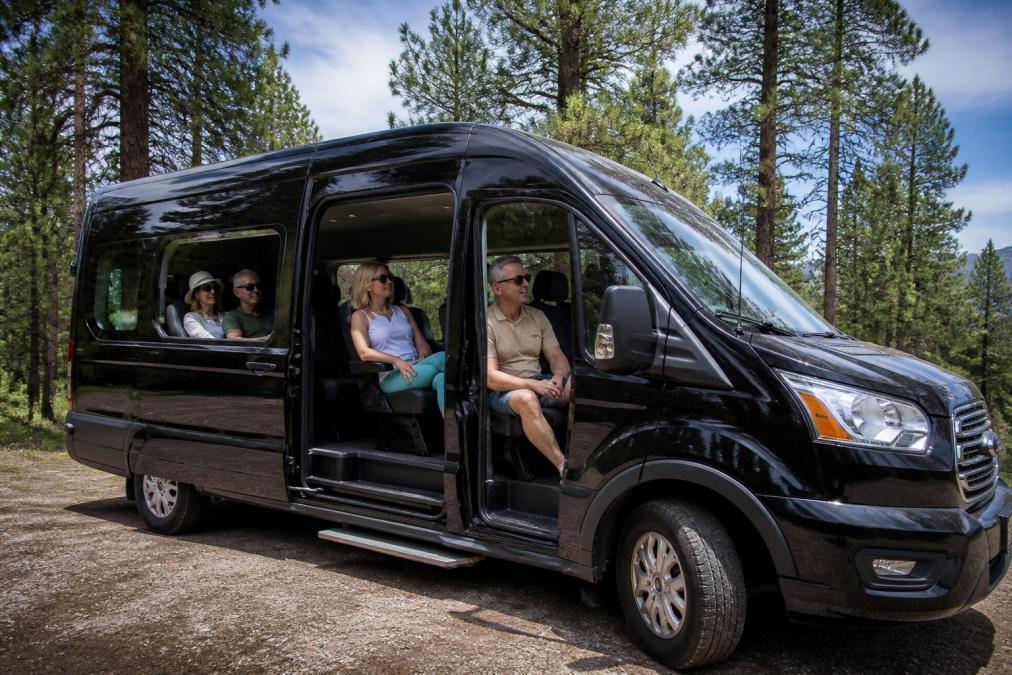
Upgraded Ford Transit vans offer flexible seating that adapts to group size and composition. Families with young children, groups with mobility considerations, and multi-generational parties can all be accommodated without the rigid seating of a motorcoach. Large windows maximize sightseeing visibility. The smaller passenger count, typically under 10 people, means the guide can adjust pace, answer individual questions, and tailor commentary to the group's interests.
Door-to-door pickup from Flagstaff-area hotels and bed-and-breakfasts eliminates the friction of arranging separate transportation to a departure point. For visitors without rental cars, this convenience is decisive. The pickup flexibility also accommodates guests staying in Sedona or Williams.
Grand Canyon Journeys offers full refunds for cancellations made at least 24 hours before departure, providing the flexibility that families and groups with uncertain weather forecasts require.
Full-Day Sightseeing Itineraries and What to Expect
A full-day sightseeing tour typically spans 10-12 hours from pickup to return, with roughly 6-7 hours spent at the South Rim and surrounding viewpoints. The morning drive covers approximately 80 miles of scenic highway, ascending from Flagstaff's high-elevation forests into the transition zone where ponderosa pines give way to pinyon-juniper scrubland. The landscape changes visibly as elevation decreases, illustrating how climate and vegetation shift with altitude.
South Rim viewpoints are selected for geological and scenic significance. Mather Point reveals multiple rock layers and the Colorado River from a perspective that illustrates the canyon's three-dimensional depth. Yavapai Geology Museum provides interpretive displays that help visitors understand the Vishnu Basement rocks at the canyon floor, the Grand Canyon Supergroup strata above, and younger Paleozoic formations near the rim. Named overlooks like Hopi Point, Desert View, and Lipan Point each reveal different geological narratives and lighting conditions.
The midday meal at El Tovar, the historic hotel perched on the rim, anchors the itinerary. Built in 1905, El Tovar functions as a landmark rather than a simple dining venue (nps.gov). Dining with rim views transforms a logistical necessity into a memorable experience.
Afternoon hours typically focus on quieter viewpoints and interpretive stops that showcase different aspects of the canyon's geology and human presence. Guides explain how the Colorado River carved the canyon over millions of years and how ancestral Puebloan peoples inhabited cliff dwellings. Photography stops are built into the itinerary, acknowledging that capturing images is part of how many travelers process and remember experiences.
The return drive occurs in late afternoon or early evening, allowing travelers to experience the canyon under changing light conditions. This temporal variation deepens the visual and educational experience compared to a single-viewpoint visit.
Guided Canyon Hikes and Adventure Options
Grand Canyon Journeys offers day hiking as a separate product category, distinct from standard sightseeing tours. Day hikes depart from the South Rim and descend into the canyon, providing hikers with intimate contact with geology, vegetation, and the Colorado River environment that rim-level viewing cannot replicate. These are backcountry experiences requiring physical conditioning and appropriate preparation.
Common day hike options include the Bright Angel Trail, which descends into the inner canyon with switchbacks that reveal geological layers in real time. As hikers descend, they move through different climate zones: the rim's cool alpine environment transitions to warmer, drier conditions at lower elevations. The temperature differential between the South Rim (approximately 7,000 feet) and the Colorado River (roughly 2,000 feet) is substantial, often 15-20 degrees Fahrenheit or more (peer-reviewed research).
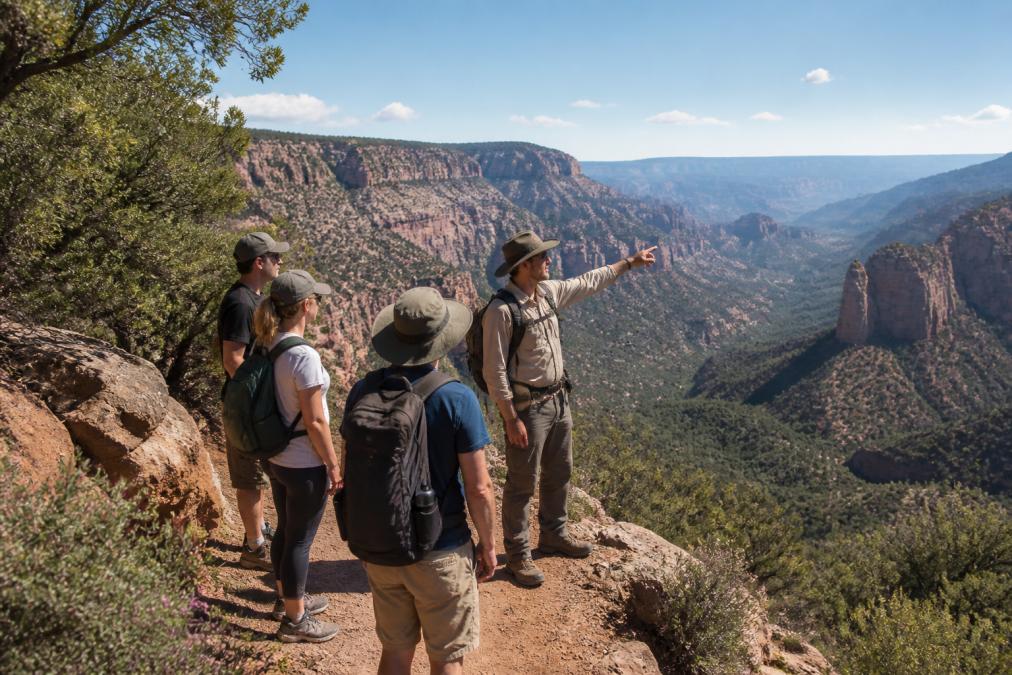
Hikers typically reach destinations like Indian Garden, Three-Mile Resthouse, or Plateau Point rather than attempting full rim-to-river-to-rim traversals. These turnaround points provide meaningful canyon immersion while remaining achievable within a single day. The return ascent requires more physical effort than the descent, as hikers battle elevation gain and accumulated fatigue.
Professional guides on canyon hikes manage group pacing to accommodate different fitness levels, identify geological formations, point out native plants adapted to desert conditions, and monitor for signs of heat stress or fatigue. This guidance is essential safety infrastructure. The canyon's remoteness, temperature extremes, and consequences of dehydration make professional supervision valuable for visitors unfamiliar with backcountry conditions.
Day hiking differs fundamentally from sightseeing. Sightseeing tours prioritize accessibility for visitors of varying mobility levels. Day hikes demand physical fitness and involve genuine exertion. Hikers must carry adequate water, wear appropriate footwear, and understand their own physical limits.
Seasonal Availability and Best Times to Visit
The Grand Canyon South Rim operates year-round, but seasonal conditions significantly affect comfort and safety. Spring and fall, roughly March through May and September through November, offer the most favorable conditions for full-day tours. Temperatures are moderate, daylight hours are sufficient for extended itineraries, and weather is generally stable. Spring brings wildflower blooms; fall offers crisp, clear days with excellent visibility for photography.
Summer (June through August) brings intense heat, particularly at lower elevations. While the South Rim remains cooler than inner-canyon areas, daytime temperatures can exceed 80 degrees Fahrenheit. Heat stress becomes a real consideration for day hikers, who must carry significantly more water and manage exertion carefully. Afternoon thunderstorms are common, creating flash-flood risks in narrow canyon drainages.
Winter (December through February) brings snow and ice to the South Rim. Snow doesn't necessarily close the park, but it creates hazardous conditions on rim trails and viewpoint access roads. Visibility can be compromised, reducing the photographic and interpretive value of sightseeing tours. Day hiking becomes significantly more dangerous due to ice on steep sections.
Flagstaff experiences winter weather more severely than the South Rim. Winter storms can close roads between Flagstaff and the canyon, disrupting tour operations. This geographic variation means weather conditions must be assessed for both the departure point and the destination.
Seasonal variation also affects daylight hours. Winter days are short; summer days are long, allowing tours to depart early and return late. Spring and fall offer a middle ground: sufficient daylight without the heat stress of summer or the cold of winter.
Transportation, Logistics, and Accessibility Considerations
Traveling from Flagstaff to the Grand Canyon South Rim requires roughly 80 miles of driving through landscape that transitions from high-elevation forest to lower-elevation desert scrubland. For visitors without rental vehicles, this distance presents a logistical barrier that private tour operators solve through door-to-door pickup and transportation.
Grand Canyon Journeys uses upgraded Ford Transit vans that prioritize passenger comfort and accessibility compared to standard motorcoaches. Flexible seating arrangements accommodate groups with varying mobility needs. Families with young children can manage restless passengers more easily in a smaller vehicle. Older adults with mobility limitations can be positioned near exits for easier access.
Accessibility at the South Rim itself varies. Paved viewpoint areas near the visitor center are wheelchair-accessible. Many named overlooks involve short walks on paved surfaces. However, day hiking trails are not wheelchair-accessible, and some viewpoints require unpaved walking. Professional guides understand these constraints and can recommend itineraries that match group accessibility needs.
Non-drivers particularly benefit from private tour structure. Visitors without vehicles can participate in full-day sightseeing without relying on public shuttle services or rental cars. Door-to-door pickup from Flagstaff-area lodging eliminates the need to arrange separate transportation to a tour departure point.
Altitude adjustment is relevant for visitors arriving from sea level. Flagstaff sits at approximately 7,000 feet; the South Rim is at similar elevation. Some visitors experience mild altitude effects, shortness of breath, headache, or fatigue, during the first day at elevation. Staying in Flagstaff overnight before a canyon tour allows partial acclimatization. Professional guides recognize altitude-related symptoms and adjust activity pacing accordingly.
Planning Your Flagstaff Tour: Booking and Cancellation
Booking a private sightseeing tour involves selecting a departure date, confirming group size and composition, and communicating any accessibility needs or specific interests to the tour operator. Grand Canyon Journeys manages bookings directly, allowing travelers to discuss preferences with the company before committing. This direct communication is valuable for groups with specific needs: families wanting child-friendly pacing, photographers seeking optimal light conditions, or visitors with mobility considerations requiring accommodation.
Advance booking is essential, particularly during peak seasons (spring and fall). Tour operators manage vehicle capacity and guide scheduling; availability diminishes as popular dates approach. Booking several weeks in advance ensures preferred dates and allows time for the operator to plan logistics and communicate pre-tour details.
Grand Canyon Journeys offers full refunds for cancellations made at least 24 hours before departure. This policy acknowledges that travel plans shift due to weather, illness, or schedule changes. A 24-hour cancellation window provides the operator sufficient time to reallocate vehicle and guide resources while protecting travelers from losing substantial deposits.
Pre-tour communication typically includes logistics details: exact pickup time and location, what to bring (water, sunscreen, comfortable footwear), weather forecast and recommended clothing, and any special requests or concerns. This communication allows travelers to prepare appropriately and allows the guide to plan the itinerary with group composition and interests in mind.
| Planning Element | Timing | Key Consideration |
|---|---|---|
| Booking | 4-8 weeks before travel | Peak seasons fill quickly |
| Cancellation deadline | 24 hours before departure | Full refund policy |
| Pre-tour communication | 1-2 weeks before | Logistics, weather, packing |
| Arrival at pickup location | 10-15 minutes early | Confirm exact address and time |
| Return time | Evening (typically 5-7 PM) | Plan evening activities accordingly |
Flagstaff sightseeing tours balance structure with the flexibility that private travel provides. Unlike fixed-schedule motorcoach operations, private tours adapt to group interests, pace, and accessibility needs. Professional guides transform scenic viewing into educational experience, contextualizing geology, ecology, and cultural history within the landscape itself.
Grand Canyon Journeys operates these private tours from Flagstaff with included park fees and dining at the historic El Tovar. Booking is straightforward, cancellation policies protect travelers' flexibility, and the company's track record demonstrates consistent delivery of high-quality experience. For families, couples, and groups prioritizing comfort, personalization, and meaningful interpretation, private tours departing from Flagstaff transform a day trip into a memorable experience that captures the canyon's geological and cultural significance.
Frequently Asked Questions
What's included in a full-day flagstaff sightseeing tour?
Full-day sightseeing tours typically include door-to-door hotel pickup, park entrance fees, professional guide services, and comfortable transportation in a private vehicle. Many operators include meals or dining experiences at scenic locations. Specific inclusions vary by tour operator, so confirm what's covered when you book. Grand Canyon Journeys includes park fees and dining at the historic El Tovar on full-day journeys.
How do private Grand Canyon tours differ from group bus excursions?
Private Grand Canyon tours offer flexible itineraries tailored to your group's pace and interests, avoiding crowded shared buses. You travel with your own guide in a dedicated vehicle, allowing for personalized stops, photography time, and conversation without competing for attention. Private tours provide door-to-door convenience from your hotel and accommodate specific needs, dietary preferences, accessibility requirements, or language preferences, that group tours cannot.
Are guided canyon hikes available for families with children?
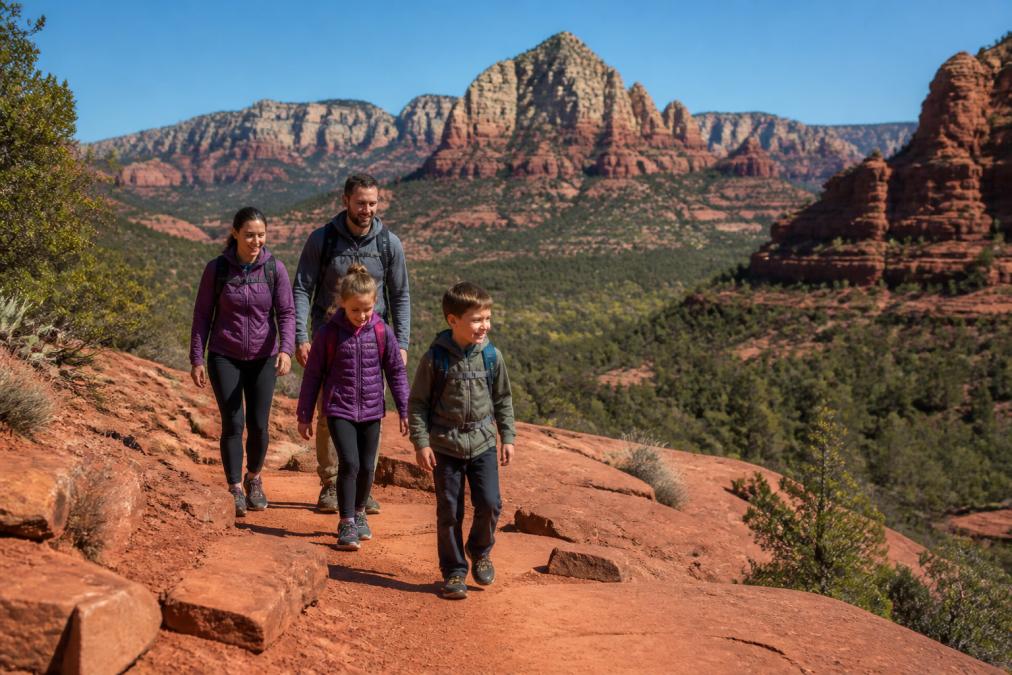
Yes, many tour operators offer family-friendly guided canyon hikes designed for different fitness levels and ages. Day hikes range from gentle rim-level walks to moderate descents into the canyon. Before booking, confirm the hike difficulty, distance, elevation change, and minimum age requirements. Discuss your children's hiking experience with the operator to ensure the trail matches their abilities.
What's the cancellation policy for sightseeing tours?
Cancellation policies vary by operator. Grand Canyon Journeys offers a full refund when canceled at least 24 hours before departure. Always review the specific cancellation terms when booking, as some operators may have stricter deadlines or non-refundable deposits. Check whether weather-related cancellations are handled differently than customer-initiated cancellations.
This article was written using GrandRanker