 listicle
Grand Canyon Tours for Families: A 2026 Planning Guide
Table of Contents
- Why Families Are Choosing Private Grand Canyon Tours
- What to Look For in Grand Canyon Tours for Families
- A Sample Grand Canyon Family Vacation Itinerary
- Day Hiking with Kids Grand Canyon: Safe and Fun Trails
- Pairing Sedona Private Tours with Your Canyon Trip
- Practical Family Travel Tips: Elevation, Weather, and Packing
- Conclusion: Start Planning Your Family Adventure
- Frequently Asked Questions
Last Updated: September 5, 2026
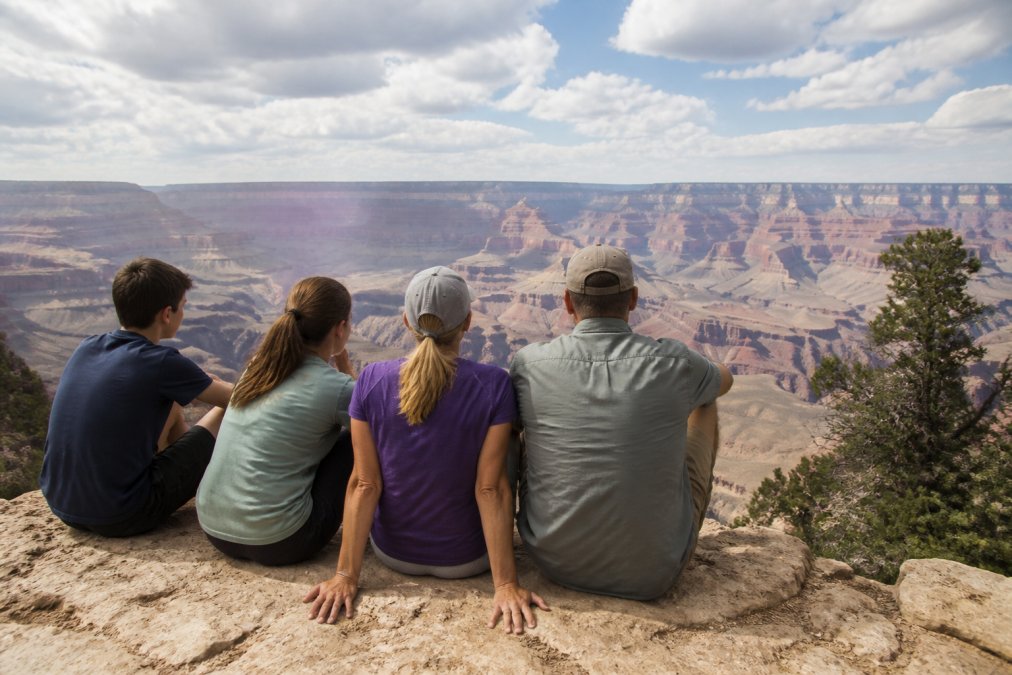
Planning a trip to one of the world’s most iconic natural wonders is exciting, but the logistics of a grand canyon tours for families experience can quickly become overwhelming. Between coordinating transportation, keeping kids entertained on the drive, and navigating a park that spans over a million acres, the details matter. This guide from Grand Canyon Journeys breaks down how to plan a seamless, memorable adventure that works for every generation in your group, focusing on what actually makes a difference on the ground.
Why Families Are Choosing Private Grand Canyon Tours
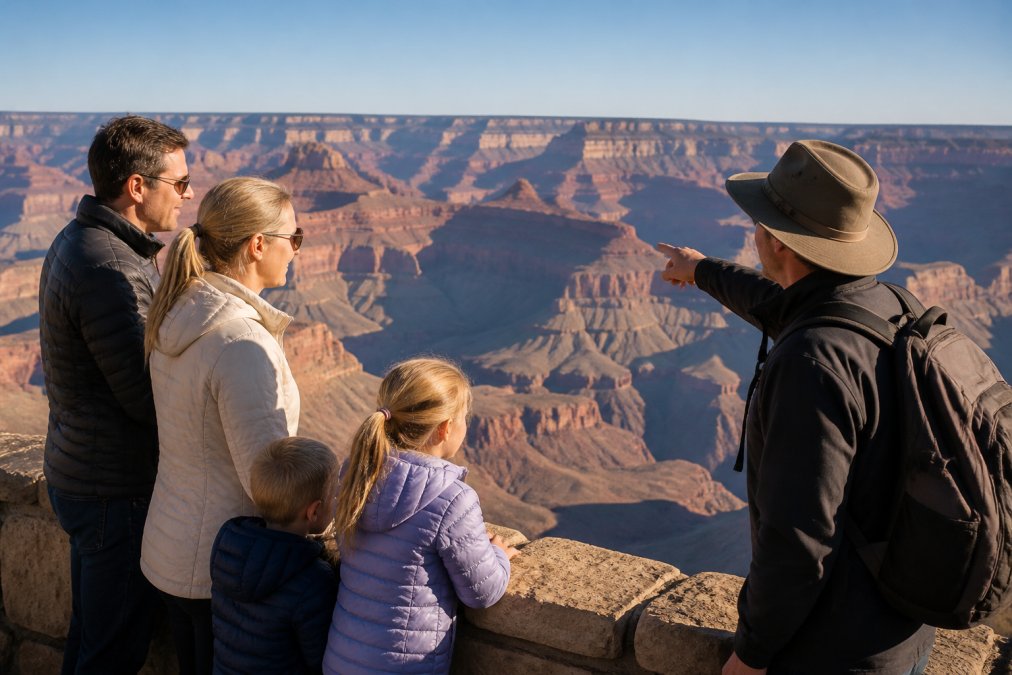
A private tour transforms the Grand Canyon from a scenic drive-by into an interactive classroom. For families, the core benefit is the flexible pace: you are not bound to a charter bus schedule or forced to wait for a group of strangers to return to the vehicle. When the kids are engaged at a viewpoint, you can stay; when they are hungry or tired, you can adjust the plan on the spot.
This flexibility directly addresses the most common family travel concern: keeping children entertained without them getting restless. A dedicated guide reads the group's energy and pivots between storytelling, geology lessons, and quick walks. The experience becomes tailored to your family's rhythm rather than the other way around.
What to Look For in Grand Canyon Tours for Families
Booking the right tour requires asking specific questions before you commit. The vehicle, the guide's approach, and the itinerary flexibility are the three pillars that determine whether your day feels effortless or exhausting.
- Private vs. Shared: Confirm the tour is truly private. Shared shuttles often mean multiple pickup stops and rigid timelines that eat into your day at the rim.
- Guide Expertise: Look for guides who can speak to kids, not just at them. A good guide connects the canyon's 1.8-billion-year geologic story to things children can grasp (nps.gov).
- Inclusions and Logistics: Ask what is covered. Park entrance fees, lunch reservations, and door-to-door pickup from your Sedona, Flagstaff, Williams, or Tusayan hotel remove the friction from your day.
When comparing providers, the difference often comes down to the vehicle and the attitude toward your schedule. Upgraded Ford Transit vans with flexible seating let families spread out, while door-to-door service means no one is wrestling with rental car seats or parking lots. The best grand canyon tours for families are the ones where the parents get to be tourists too.
A Sample Grand Canyon Family Vacation Itinerary
A well-paced day at the South Rim balances big views with short, engaging walks. A typical full-day private itinerary from Sedona, Flagstaff, Williams, or Tusayan unfolds in distinct chapters, each designed to hold a child's attention without overwhelming their legs. But the best itineraries are not just about the stops, they are about how you experience them. Here is how to turn a standard sightseeing route into an interactive family adventure.
Morning: The 'Wow' Moment and the Junior Ranger Mission
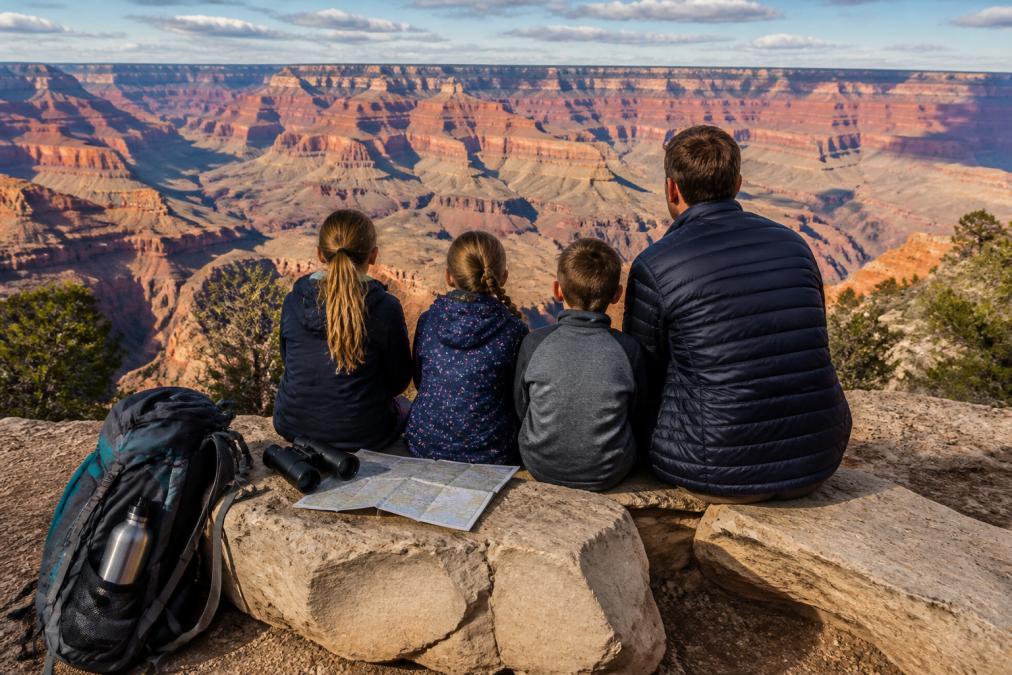
- First Views at Mather Point: This iconic overlook delivers the "wow" moment. Instead of just looking, have your guide point out the Colorado River below and the layers of rock. A good trick is to have kids find the river first, it helps them grasp the immense scale of the canyon.
- Visitor Center Stop: This is more than a restroom break. Pick up the official Junior Ranger activity booklets here. The booklet turns the entire day into a mission for kids, giving them specific things to look for and learn about. It is one of the best free educational tools the park offers, and completing it earns a badge.
Midday: Accessible Trails and Geology in Action
- Rim Trail Nature Walk: Instead of a generic stroll, target the Trail of Time section. This paved, mostly flat stretch of the Rim Trail is an outdoor geology museum. Every meter you walk represents a million years of Earth's history, with real rock samples embedded in the path (nps.gov). It is a concrete, visual way for kids to understand the canyon's 1.8-billion-year story without a single lecture.
- Lunch at the Historic El Tovar: On full-day journeys, a seated lunch here is a highlight, offering a break from the sun and a taste of park history. If you are on a shorter itinerary, the Delicatessen at Market Plaza is a faster, budget-friendly alternative with picnic tables nearby.
Afternoon: Interactive Views and Family Photos
- Yavapai Geology Museum: This is the best indoor stop for families. The large windows offer panoramic views, but the real draw is the topographical model of the canyon. Kids can trace the path of the river and see exactly where they are standing. It is a great place to ask questions and cool down on a hot afternoon.
- Desert View Watchtower (if time permits): For full-day tours that venture east, this 70-foot tower offers a unique perspective. Climbing the spiral staircase reveals murals and, from the top, a sweeping view of the Painted Desert. It is a fantastic photo opportunity and a different angle on the canyon that most visitors miss.
Accessibility Note for Families
If you are traveling with a stroller or a family member with mobility challenges, the Rim Trail between Mather Point and Yavapai Point is your best friend. It is the most accessible section of the rim, with paved, relatively flat paths and several designated accessible viewpoints. The Visitor Center and Yavapai Geology Museum are both fully accessible, with ramps and elevators. For a sensory-friendly experience, visit early in the morning (before 9 AM) when the crowds are thinner and the rim is quieter, allowing kids to focus on the sounds of the wind and the birds rather than the noise of the crowd.
This structure keeps the day moving but never rushed, ensuring the drive time is broken up by meaningful stops that feel like part of the adventure. For families looking for a deeper dive into the canyon's ecology, a separate day hiking tour can explore the rim's forest trails, but for a classic sightseeing day, this itinerary delivers the highlights with an educational twist.
Day Hiking with Kids Grand Canyon: Safe and Fun Trails
Day hiking with kids Grand Canyon style requires a different mindset than hiking with adults. The goal is not mileage; it is positive exposure to the outdoors. The South Rim's elevation of approximately 7,000 feet means the air is thinner, so even easy trails can feel more strenuous for little legs (nps.gov).
The Rim Trail is the safest bet for most families. It is mostly flat, paved in sections, and offers multiple points to turn back. For a slightly more immersive experience, the short, paved section of the Trail of Time along the Rim Trail is a geology walk where every step represents a million years of earth's history.
Pairing Sedona Private Tours with Your Canyon Trip
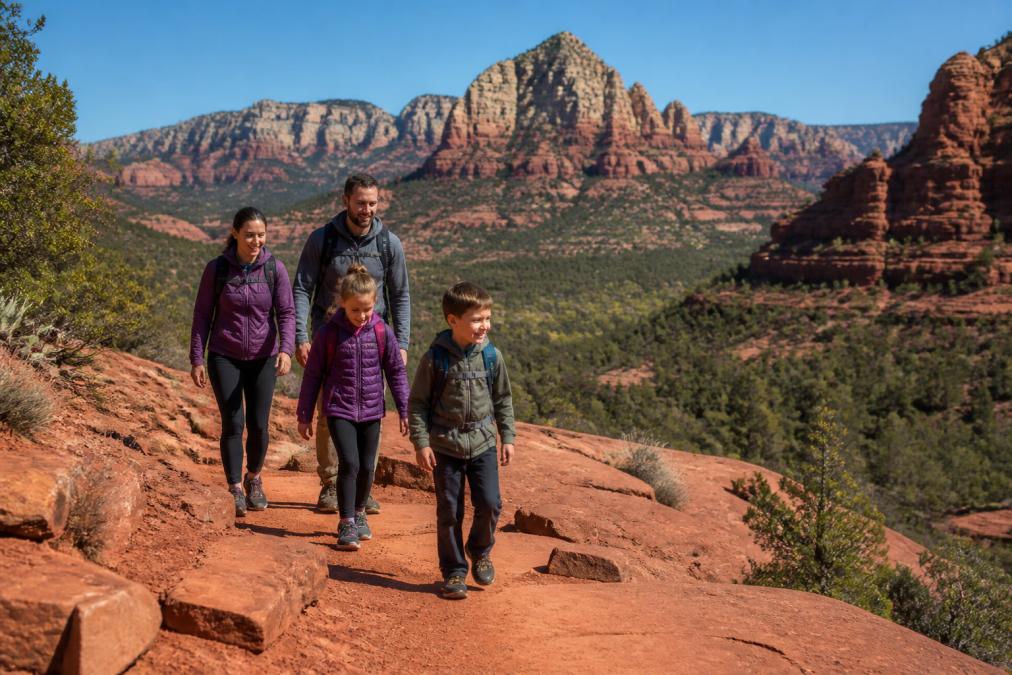
Many families visiting Northern Arizona split their time between the red rocks of Sedona and the Grand Canyon. Sedona private tours offer a different flavor of the Southwest, focusing on the towering sandstone formations, ancient cliff dwellings, and vortex sites that make the area famous. desert trip planning.
The strategic advantage of basing your family in Sedona is the variety. A day at the canyon delivers vast, open vistas, while a Sedona tour provides intimate canyon hikes and creek-side exploration. Grand Canyon Journeys serves both regions, making it possible to book a canyon adventure and a separate red rock exploration without changing providers.
This pairing works well because the driving distances are manageable. Sedona sits roughly two hours from the South Rim, making it a practical home base for a multi-day itinerary that includes both destinations. Booking private tours for each leg ensures your family has a guide who understands the local terrain, weather patterns, and the best photography spots at different times of day.
Practical Family Travel Tips: Elevation, Weather, and Packing
The single biggest mistake families make is underestimating the South Rim's environment. At approximately 7,000 feet, the weather is not just variable; it is a defining factor of your entire day. A clear morning can turn into a windy, cold afternoon, and summer monsoons can roll in by midday. The key is to plan for the season you are visiting, not just the forecast you checked at home.
What to Expect by Season
Spring (March - May): Expect a mix of everything. Early spring can bring snow, while late May afternoons can feel warm in the sun. Highs range from the 40s to the 70s, but overnight lows frequently dip below freezing. The key here is the wind; spring is the windiest season at the rim, so a windbreaker is just as important as a warm layer.
Summer (June - August): This is the busiest and hottest time at the rim, with highs often reaching the 80s. However, the sun at this elevation is intense, and the air is dry. Afternoon thunderstorms are a near-daily occurrence in July and August, so plan to finish any long walks by early afternoon. For kids, the biggest risk is sunburn and dehydration, not heat exhaustion, as the rim itself rarely gets dangerously hot.
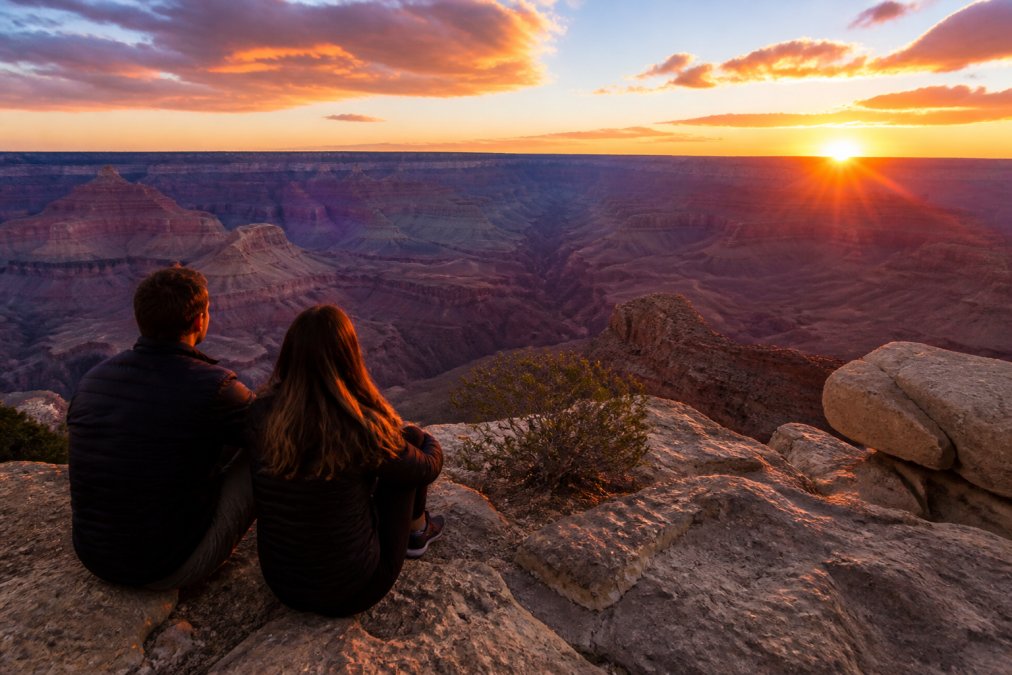
Fall (September - November): Many locals consider this the ideal family window. September is warm and clear, while October brings crisp air and golden light on the canyon walls. By November, expect cold mornings and early sunsets. The key fall variable is the rapidly dropping temperature after sunset; if you are staying for the stars, you will need winter coats even in early fall.
Winter (December - February): The South Rim is a winter wonderland, but it is cold. Daytime highs often hover around freezing or just above, and snow can close parts of the rim. The good news is that the crowds are thin, and the canyon dusted with snow is a sight you will not forget. The key gear here is traction: sturdy, waterproof boots for everyone, and consider Yak-Trax or similar slip-on cleats for icy sections of the Rim Trail.
The Seasonal Packing List
Instead of a one-size-fits-all list, build your daypack based on the season you are visiting.
- Summer Essentials: Wide-brimmed hats, polarized sunglasses, high-SPF sunscreen, and light, long-sleeved shirts for sun protection. A reusable water bottle (at least 1 liter per person) is non-negotiable. Pack a light rain jacket for the afternoon monsoon.
- Winter Essentials: Thermal base layers, fleece mid-layers, and a waterproof, windproof outer shell. Bring wool socks and insulated, waterproof boots. A warm hat and gloves are mandatory, as the wind chill at the rim can be brutal.
- Year-Round Essentials: Lip balm with SPF, moisturizer, and a small first-aid kit with blister bandages. The dry air at 7,000 feet will chap lips and skin faster than you expect.
A Note on Elevation and Kids
The South Rim's elevation is often the most underestimated factor for families. While most healthy children adapt quickly, the thinner air can cause headaches, fatigue, or mild shortness of breath, especially during physical activity. The best approach is to slow down. Plan for a relaxed pace on the Rim Trail, take frequent water breaks, and do not push kids to hike further if they say they are tired. If anyone in your group has a pre-existing respiratory or heart condition, consult your doctor before your trip about how the elevation might affect them. For most families, the key is simply to plan a less ambitious itinerary for the first few hours until everyone acclimates.
Conclusion: Start Planning Your Family Adventure
Coordinating a multi-generational trip to the Grand Canyon is a balancing act of interests, energy levels, and logistics. The families who enjoy the day most are the ones who remove the uncertainty: private transportation, a guide who adapts to the group, and an itinerary built around the reality of traveling with children. Grand Canyon Journeys offers 100% private tours from Sedona, Flagstaff, Williams, and Tusayan, with door-to-door pickup in upgraded Ford Transit vans and guides who speak both English and German. With park fees included and flexible cancellation up to 24 hours before departure, the focus stays on the canyon, not the coordination. Get started with Grand Canyon Journeys and check availability for your family's dates.
Frequently Asked Questions
Is the Grand Canyon worth it with kids?
Yes. The Grand Canyon offers experiences you cannot find anywhere else, from jaw-dropping scenic views to the Junior Ranger program. The key is structuring the day around their energy levels. A private tour helps by allowing you to set the pace, take breaks when needed, and skip the stress of navigating busy shuttle buses. Seeing the canyon through a child's eyes, where every rock layer sparks a question, makes the trip memorable for the whole family.
What is a good age to take kids to the Grand Canyon?
Children of all ages can enjoy the Grand Canyon, but the experience changes with age. Toddlers are fine for short rim walks and scenic views, while school-age kids (6-12) are the prime audience for the Junior Ranger program and short, easy hiking trails. Teenagers can handle longer day hikes and appreciate the geology and history on a deeper level. A private tour is ideal for multi-generational groups with mixed ages, as the itinerary can be adjusted to suit everyone's stamina.
What is the best month to see the Grand Canyon?
For families, the best months are typically late spring (April-May) and fall (September-October). During these times, the South Rim weather is pleasant, with daytime highs that are comfortable for exploring, and the busy summer crowds have not yet arrived or have already thinned out. Summer (June-August) is hot and crowded, while winter brings snow and colder temperatures, though the rim can be beautiful. Always check the forecast before your trip, as conditions change quickly at 7,000 feet elevation.
What are the benefits of a private tour for families?
Private tours offer significant advantages for families. You get a flexible pace tailored to your group, meaning no waiting for latecomers or feeling rushed at viewpoints. Transportation is door-to-door from your Sedona, Flagstaff, Williams, or Tusayan hotel in a comfortable vehicle, eliminating the hassle of parking and park shuttle logistics. Your guide can focus on your family's interests, turning travel time into engaging conversation and providing a more personal, educational experience than a large group bus tour.
Frequently Asked Questions
Q: Is the Grand Canyon worth it with kids?
A: Yes. The Grand Canyon offers experiences you cannot find anywhere else, from jaw-dropping scenic views to the Junior Ranger program. The key is structuring the day around their energy levels. A private tour helps by allowing you to set the pace, take breaks when needed, and skip the stress of navigating busy shuttle buses. Seeing the canyon through a child's eyes, where every rock layer sparks a question, makes the trip memorable for the whole family.
Q: What is a good age to take kids to the Grand Canyon?
A: Children of all ages can enjoy the Grand Canyon, but the experience changes with age. Toddlers are fine for short rim walks and scenic views, while school-age kids (6-12) are the prime audience for the Junior Ranger program and short, easy hiking trails. Teenagers can handle longer day hikes and appreciate the geology and history on a deeper level. A private tour is ideal for multi-generational groups with mixed ages, as the itinerary can be adjusted to suit everyone's stamina.
Q: What is the best month to see the Grand Canyon?
A: For families, the best months are typically late spring (April-May) and fall (September-October). During these times, the South Rim weather is pleasant, with daytime highs that are comfortable for exploring, and the busy summer crowds have not yet arrived or have already thinned out. Summer (June-August) is hot and crowded, while winter brings snow and colder temperatures, though the rim can be beautiful. Always check the forecast before your trip, as conditions change quickly at 7,000 feet elevation.
Q: What are the benefits of a private tour for families?
A: Private tours offer significant advantages for families. You get a flexible pace tailored to your group, meaning no waiting for latecomers or feeling rushed at viewpoints. Transportation is door-to-door from your Sedona, Flagstaff, Williams, or Tusayan hotel in a comfortable vehicle, eliminating the hassle of parking and park shuttle logistics. Your guide can focus on your family's interests, turning travel time into engaging conversation and providing a more personal, educational experience than a large group bus tour.